
THE PROCESS
How branded vape hardware actually gets made
Most brands are surprised by two things: how long tooling takes, and how much of the outcome is decided before a single part is cut.
DESIGN
30 days
From deposit to a complete, manufacturable design package.
TOOLING & VALIDATION
12–15 weeks
Prototypes, molds, and three rounds of engineering validation.
PRODUCTION
4–6 weeks
Pilot run, QC standard, then full mass production.
REALISTIC TOTAL
6–12 months
Best case is around five months. Plan for more.
THE FAST PATH
OEM branding: about 40 days
Everything below describes a custom device built from nothing. If a device already in production would work with your branding on it, you skip almost all of it — no tooling, no validation cycles, no six-month program.
01
Pick the hardware
Choose from the catalog of brandable, production-ready devices. MOQ and unit cost quoted up front.
02 · DAYS
Artwork & colorways
Your logo and artwork applied, colorways selected, files prepared to factory print specification.
03 · 15–30 DAYS
Production
The factory runs your order against approved artwork.
04 · 10–15 DAYS
Air freight
Shipped to any state in the Lower 48. Once tracking is issued I monitor the shipment through to delivery.
Transit times can extend beyond this. Once the factory releases a shipment, freight forwarders, customs and domestic carriers are outside anyone's control — I watch the tracking, but I do not control the carrier.
PART ONE — WORKING WITH ME
Getting to a design a factory can build
This is the part I control, and it is the part that determines everything downstream. A design that reaches the factory wrong costs weeks and tooling money to correct.
00
1 HOUR
Consultation
We talk through what you want to build and whether it can be built. You leave knowing the realistic cost, the realistic timeline, and the two or three decisions that will drive both. $2,500 — credited in full against the $5,000 deposit or your final balance if you go on to commission a project, whichever you prefer. If you decide not to proceed, it was simply a paid hour of consulting. No obligation either way.
01
IMMEDIATE
Deposit & requirement evaluation
A $5,000 deposit locks a confirmed start date, a written project schedule, and capacity in my calendar. We collect requirements properly — format, target cost per unit, markets, compliance obligations, brand direction — and I run a feasibility study before any drawing begins. The deposit is credited against your final fee.
02
30 DAYS
Industrial design & mechanical design
ID first — form, proportion, materials, finish, how the device reads in a hand and on a shelf. Then MD — internal architecture, airflow, thermal behavior, heating element selection, cell and PCB layout, tolerances, and assembly sequence. You get renders, a complete spec package, and three rounds of revision. What leaves here is a design a factory can quote from, not a picture.
PART TWO — PRODUCTION
Through the factory floor
Production runs through partner factories in Shenzhen. I coordinate it in Mandarin and stay on the project through to shipment — but the factory contracts with you, and these lead times are theirs.
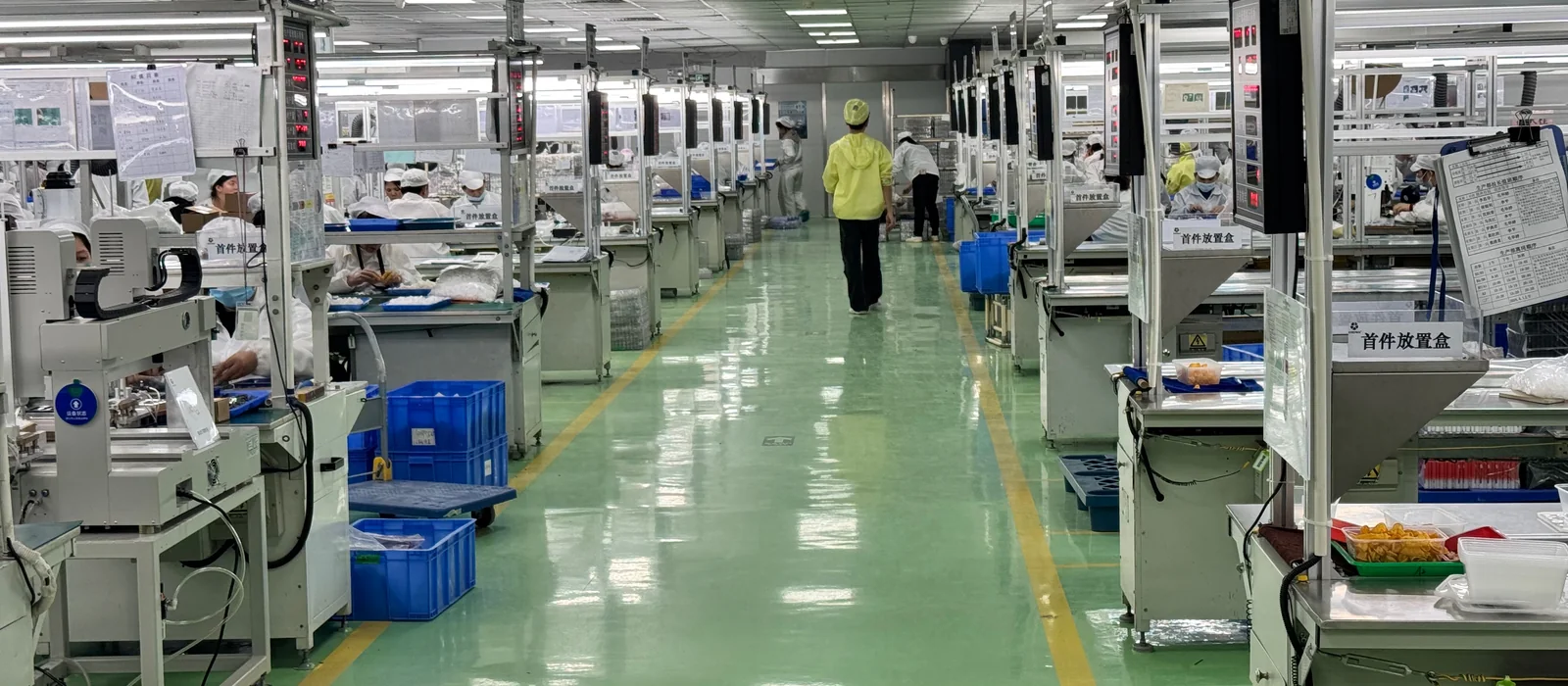
PARTNER FACTORY · SHENZHEN
Every stage below happens on a floor like this one. I go and stand on it.
03
2–3 WEEKS
Prototyping
Working samples get built from the design package so you can hold the thing before anyone cuts steel. We review fit, finish, draw, weight, and heat, and either approve or revise. Catching a problem here costs days. Catching it after tooling costs months.
04
1–2 WEEKS
Project kickoff
R&D and tooling fees are paid to the factory and the production schedule is set. This is the commitment point — the moment the project stops being reversible on paper and starts costing real money in steel.
05
4 WEEKS
Molding
Injection molds are cut for every plastic part in the device. Four weeks is normal and it is not compressible — a mold is a block of hardened steel machined to your tolerances. Every change from here forward means re-cutting or re-welding a tool.
06
5–6 WEEKS
Pre-production verification
Three formal rounds of validation, each answering a different question. EVT — engineering validation — asks whether the design works at all. DVT — design validation — asks whether it works reliably, under heat, drop, leak, battery cycling, and the emissions standards your markets require. PVT — production validation — asks whether the factory can build it repeatably at volume and hold quality across a run. Findings from each feed back into tooling before the next begins.
07
4–6 WEEKS
Mass production
Full production against the QC standard set in PVT, packed in the packaging designed alongside the device, and shipped. Lead time scales with order size and where the factory sits in its calendar.
PARALLEL TRACK
Packaging runs alongside
Packaging does not wait for the device to be finished. Once the form factor is locked at the end of design, the box can be developed in parallel — 30 business days from the point I have your palette with Pantone numbers, vector logos, and a written design direction. By the time PVT finishes, your packaging is print-ready.
Retail boxes & inserts
Structure, dielines, and finish, designed around the actual device dimensions.
Child-resistant formats
Where your market requires it, built to the standard rather than retrofitted.
Compliance artwork
Warnings, panels and required marks laid out so they do not wreck the design.
Print-ready files
Handed to your printer or produced through the same factory network.
THE OTHER END OF THE LINE
Hardware only matters once it is filled
Most people who design vape hardware have never stood in the room where it gets filled, assembled, and packed. I have, on both sides of the Pacific. It is where you find out that a tolerance is tight enough to leak, that a pod is awkward to seat at speed, or that your packaging costs the operator four seconds a unit. Those are design problems, and they are cheaper to fix before tooling than after.
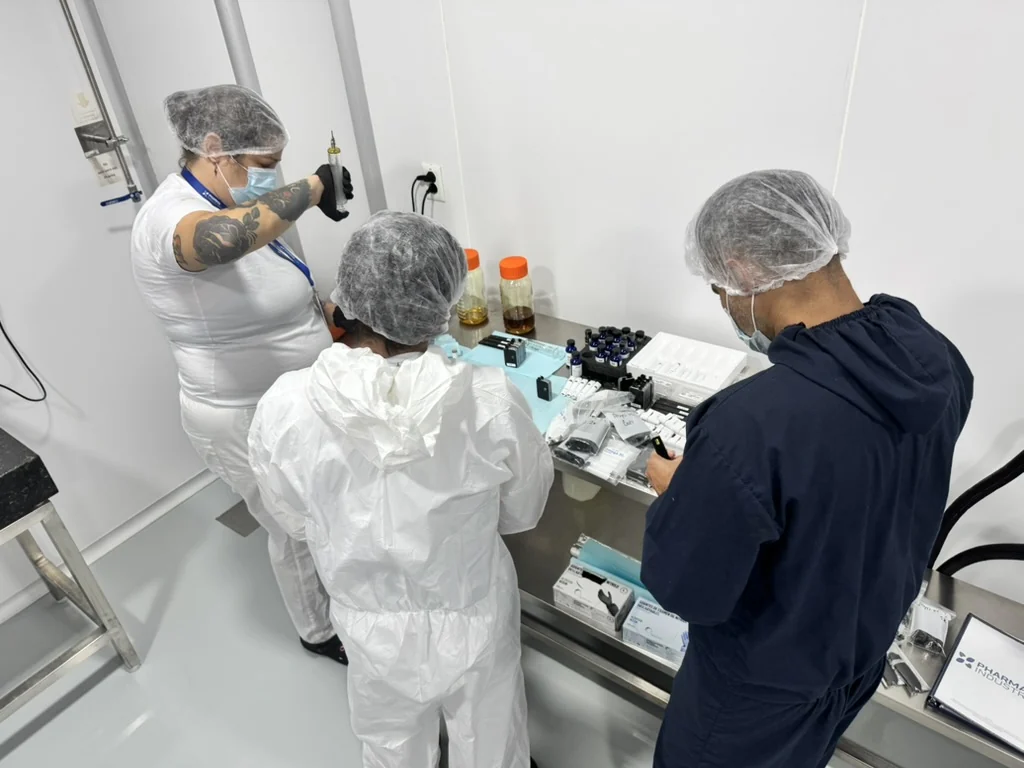
Gowned, gloved, and on the bench. Watching a run is how you learn what your design costs the operator.
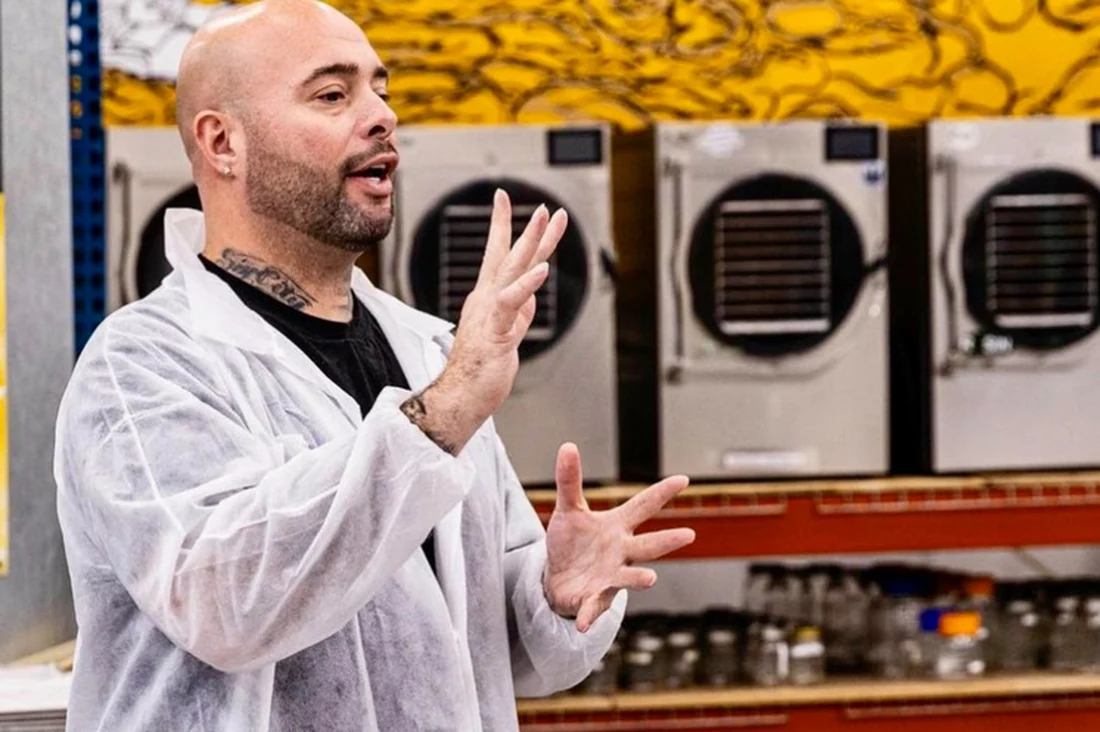
Walking a production team through hardware they are about to run at volume.
WHAT THESE STAGES ACTUALLY LOOK LIKE
Not a stock photo among them
These are the rooms your project passes through, photographed on visits to the partner factories that build it.
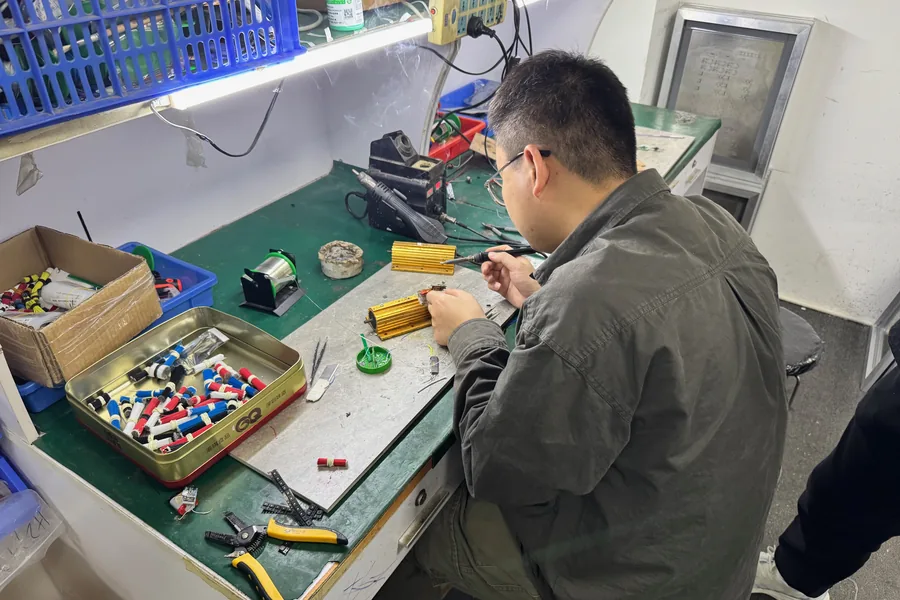
Working samples built and reworked by hand before anything is committed to tooling.
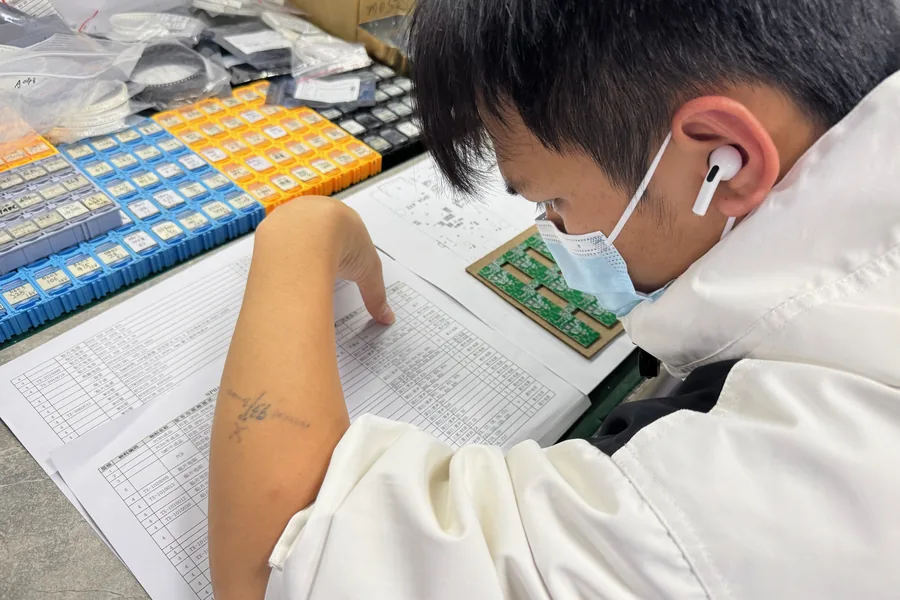
Bill of materials checked line by line against the boards that will actually be built.
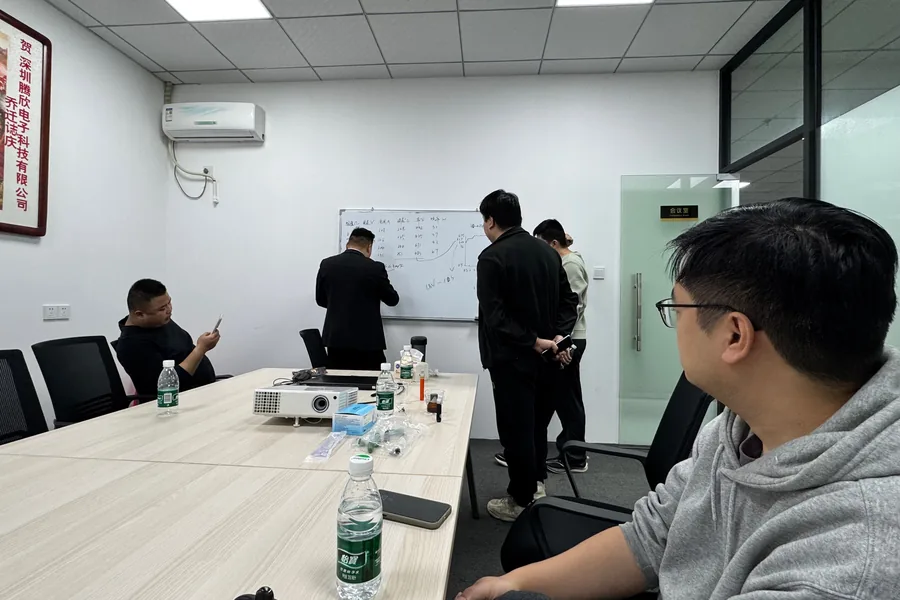
Voltage, current, temperature and power worked out on the board with the factory's engineers.
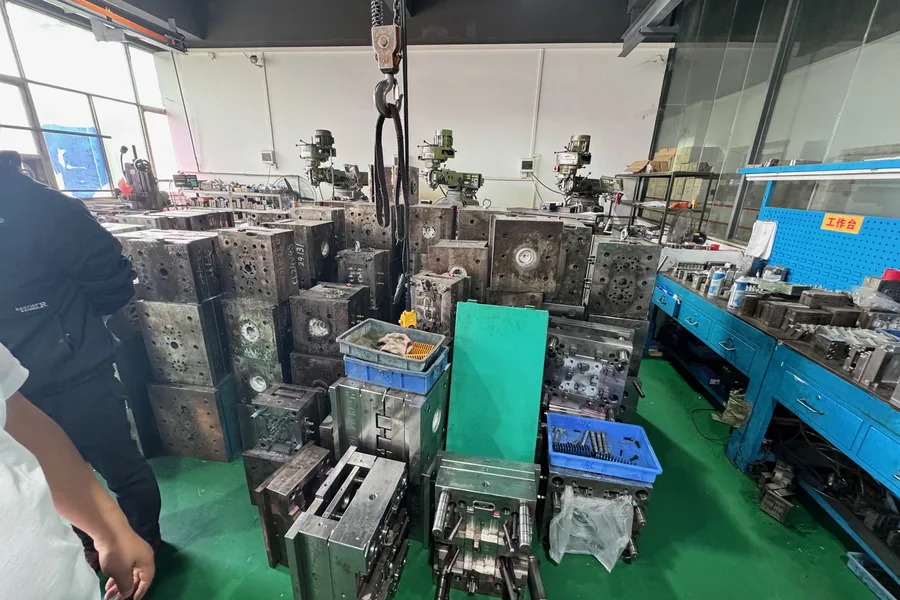
This is why four weeks is four weeks. Each block is a hardened steel tool cut to your tolerances.
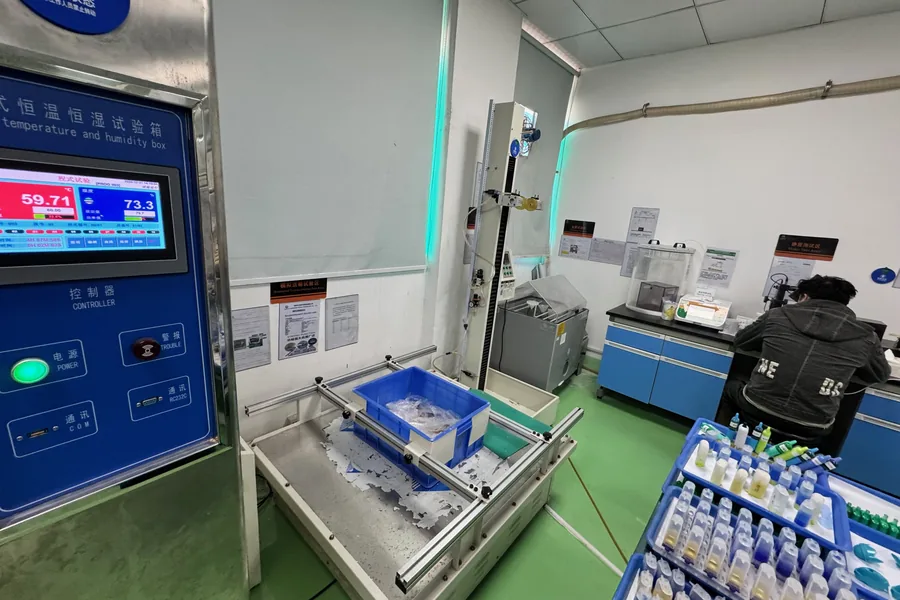
Temperature and humidity chambers, drop and transport simulation. Validation is a room, not a checkbox.
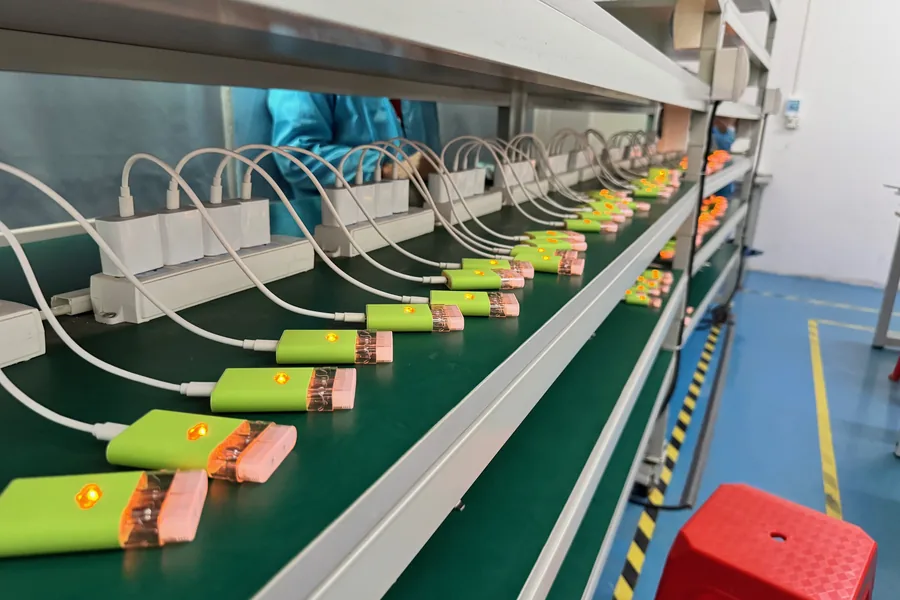
Every unit charged and function-tested on the line before it is packed.
Adding it up
Design through mass production is roughly 20 to 25 weeks if every stage passes first time. That almost never happens on a new device. One failed DVT round, one tooling change, one certification surprise, and you are into month eight.
That is why I quote six to twelve months rather than five. The five-month version assumes nothing goes wrong, and something always goes wrong.
What speeds it up
Adapting a proven platform instead of starting from zero. Deciding quickly and with one voice. Having brand assets ready before packaging needs them. Not changing the form factor after molding starts.
What slows it down
Compliance requirements discovered late. Unclear ownership of decisions on your side. Chasing a unit cost the design was never going to hit. Approving a prototype you have not actually used.
What I would tell you honestly
If you need product on shelves in ninety days, a ground-up device is the wrong path. Adapt an existing platform with your branding and tooling changes instead. I will tell you that on the consultation rather than after you have paid a deposit.